How to Import Compressed Sofas from China
The global furniture industry is changing rapidly, and compressed sofas have become one of the fastest-growing categories in modern furniture exports.
For furniture importers, wholesalers, online sellers, and private label brands, compressed sofas offer a smarter solution for reducing shipping costs and improving logistics efficiency.
China has become one of the world’s leading manufacturing centers for compressed sofas thanks to its mature furniture supply chain, foam production capabilities, and advanced vacuum compression technology.
In this article, we will explain how to import compressed sofas from China and what buyers should pay attention to before placing an order.
What Is a Compressed Sofa?
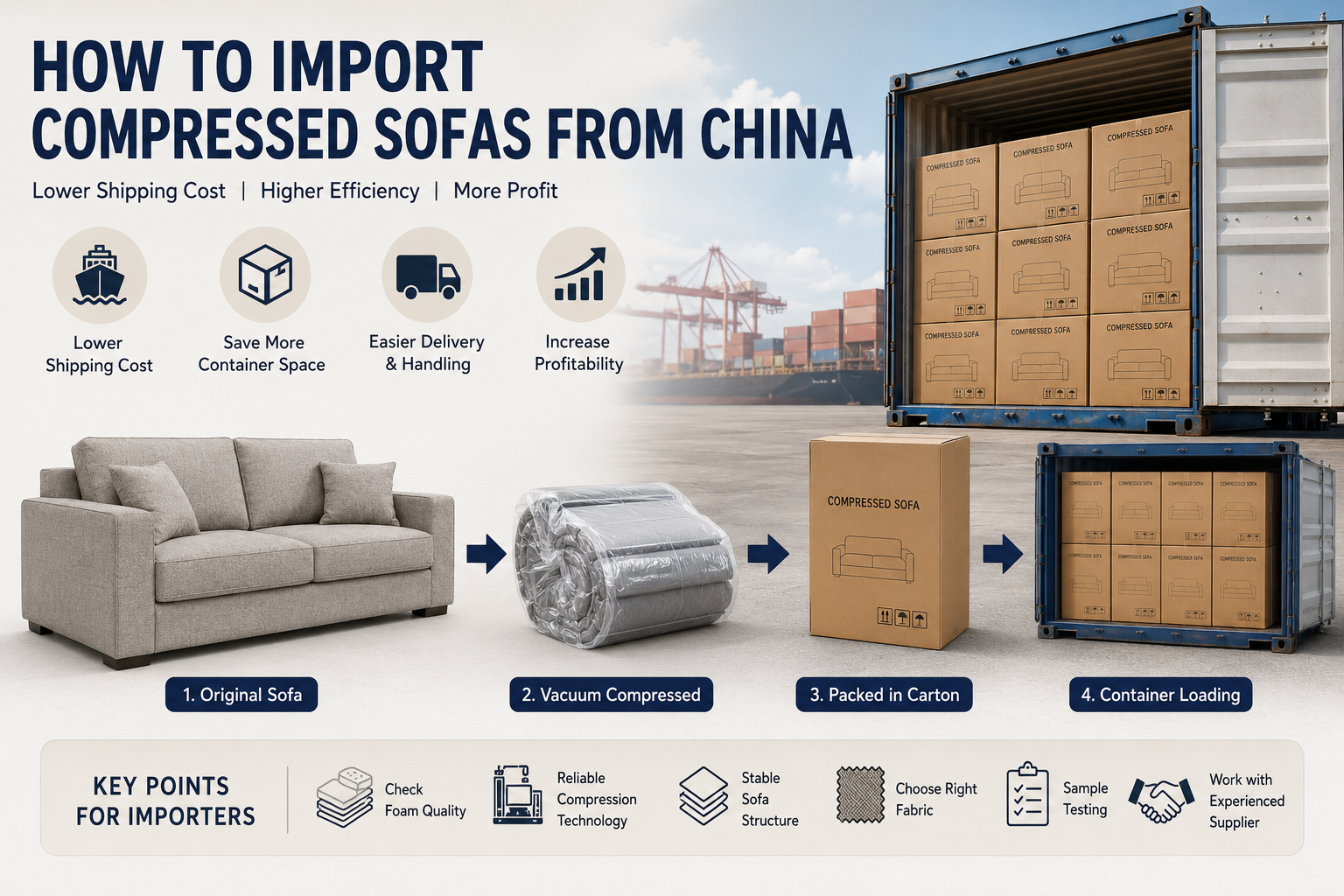
A compressed sofa is a sofa that can be vacuum-packed into a smaller size for transportation.
After unpacking, the sofa gradually returns to its original shape.
Most compressed sofas use:
- High resilience foam
- Foam-based modular structures
- Vacuum compression packaging
- Roll-pack or carton packaging systems
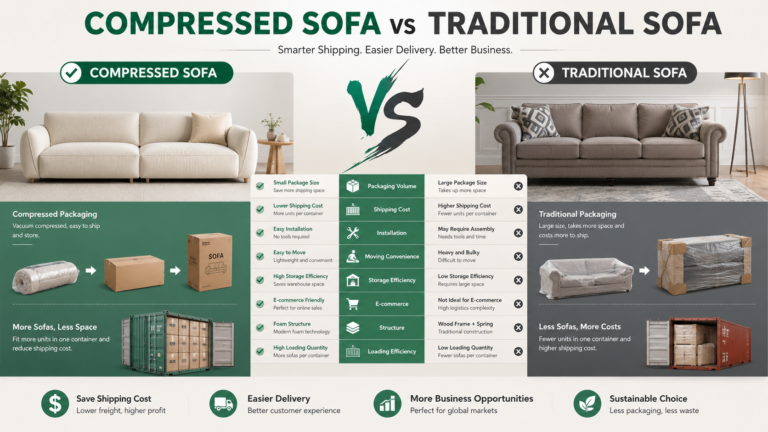
Compared with traditional sofas, compressed sofas are easier to transport, store, and deliver.
Why More Buyers Are Importing Compressed Sofas
Lower Shipping Costs
One of the biggest advantages of compressed sofas is reduced shipping volume.
Traditional sofas occupy a large amount of container space, which increases international freight costs.
Compressed sofas allow importers to load more units into one container, helping reduce:
- Ocean freight cost
- Warehouse cost
- Local delivery expenses
- Overall logistics pressure
For many importers, shipping efficiency is now just as important as product pricing.
Better for E-Commerce Furniture Business
Compressed sofas are ideal for modern online furniture sales.
The smaller packaging size makes them easier for:
- Warehouse storage
- Last-mile delivery
- Apartment transportation
- Single-person handling
This is especially important in markets like:
- United States
- Canada
- United Kingdom
- Australia
- Europe
where delivery costs are relatively high.
Easier Container Loading
Container loading efficiency directly affects profit margins.
Compressed sofas help maximize container utilization by reducing packaging size.
This allows buyers to:
- Import more products per shipment
- Reduce shipping cost per unit
- Improve inventory efficiency
For wholesalers and distributors, this creates a major competitive advantage.
Why China Is a Major Source for Compressed Sofas
China has developed a strong compressed sofa manufacturing ecosystem.
Many factories now specialize in:
- Foam production
- Vacuum compression systems
- Sofa packaging technology
- OEM furniture manufacturing
Compared with smaller manufacturing regions, Chinese suppliers often offer:
- Better production capacity
- More stable lead times
- Competitive pricing
- More customization options
- Mature export experience
Important Things to Check Before Importing
1. Foam Quality
Foam quality is one of the most important factors in compressed sofas.
Low-quality foam may cause:
- Slow recovery after unpacking
- Poor support
- Sagging over time
- Shorter product lifespan
Professional manufacturers usually use high resilience foam for better:
- Elasticity
- Recovery speed
- Breathability
- Durability
When choosing a supplier, buyers should ask about:
- Foam density
- Compression recovery performance
- Durability testing
- Support structure
2. Compression Technology
Not all compression systems provide the same results.
Poor compression packaging may lead to:
- Air leakage
- Package expansion during shipping
- Product deformation
- Unstable packaging size
Experienced suppliers usually use automatic compression systems for more stable packaging quality.
Reliable compression technology is extremely important for long-distance export shipping.
3. Sofa Structure
Many compressed sofas now use full foam structures without internal springs.
This structure is more suitable for vacuum compression because it offers:
- Better recovery performance
- More stable packaging
- Reduced structural damage risk
Traditional spring sofas are often more difficult to compress efficiently.
4. Fabric Selection
Different markets prefer different sofa fabrics.
Popular export fabrics include:
- Chenille
- Linen-look fabric
- Polyester blends
- Easy-clean fabric
- Pet-friendly fabric
Before mass production, buyers should request:
- Fabric swatches
- Color options
- Abrasion testing information
How the Import Process Works
Step 1 — Select Models
Choose the sofa:
- Design
- Size
- Configuration
- Fabric
- Color
Most suppliers can provide catalogs and container loading references.
Step 2 — Request Samples
Sample testing is very important for compressed sofas.
Buyers should test:
- Comfort
- Foam rebound
- Fabric quality
- Compression recovery
- Packaging quality
Step 3 — Confirm Quotation
Pricing usually depends on:
- Order quantity
- Fabric choice
- Packaging requirements
- Shipping destination
Common trade terms include:
Step 4 — Production
After order confirmation:
- Foam production begins
- Sofa assembly is completed
- Compression packaging is prepared
- Quality inspection is performed
Lead time depends on order size and customization level.
Step 5 — Shipment and Export
Before shipment, buyers should confirm:
- Packaging photos
- Container loading
- Shipping marks
- Export documents
Common export documents include:
- Commercial invoice
- Packing list
- Bill of lading
- Certificate of origin
Common Problems Buyers Should Avoid
Choosing Suppliers Based Only on Low Price
Extremely low prices may indicate:
- Low-density foam
- Poor compression packaging
- Weak durability
- Inconsistent quality
For compressed sofas, long-term product stability is more important than short-term price advantages.
Ignoring Compression Recovery Performance
Compression recovery is critical.
If the sofa cannot recover properly after unpacking, customer complaints and return rates may increase.
Buyers should always test samples before container orders.
Working with Inexperienced Export Factories
Compressed sofas require specialized production experience.
A supplier without export experience may face problems with:
- Packaging consistency
- Compression stability
- International shipping requirements
Final Thoughts
Compressed sofas are becoming one of the most important trends in modern furniture exports.
For importers and furniture brands, they offer significant advantages in:
- Shipping efficiency
- Container loading
- Warehouse management
- E-commerce delivery
However, product quality depends heavily on:
- Foam systems
- Compression technology
- Manufacturing experience
- Packaging stability
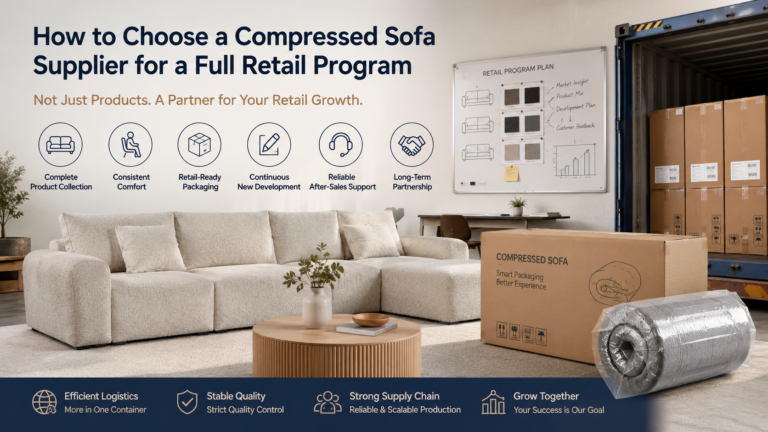
When importing compressed sofas from China, choosing the right supplier is far more important than simply finding the lowest price.
A stable supplier with reliable compression technology can help reduce logistics costs, improve customer satisfaction, and support long-term business growth.